Did you know that Indonesia has 17,508 islands? This fact alone has been luring Hayden and I back to Indonesia, knowing that we could never possibly run out of islands to explore. We had both already visited Indonesia’s most popular island, Bali, so on this trip we had our sights set on something a bit more obscure.
But first, a little bit of a lesson on Western vs Eastern Indonesia: There is an invisible line that runs through Indonesia called The Wallace Line and it essentially separates the Asian and Australasia plant and animal population. This line runs right in between the islands of Bali and Lombok—created by the Lombok Straight, which was so deep that it prevented animals from roaming across land during the ice age. Basically this gives us Asian wildlife and fauna on one side of the line and Australian and Pacific on the other. The landscape differs as well, with the Western side being much more lush and tropical and the Eastern side being much more seasonal, with a dry season and arid grasslands. So while Bali is always lush and tropical, we set off to Eastern Indonesia, which has a much more rugged landscape.
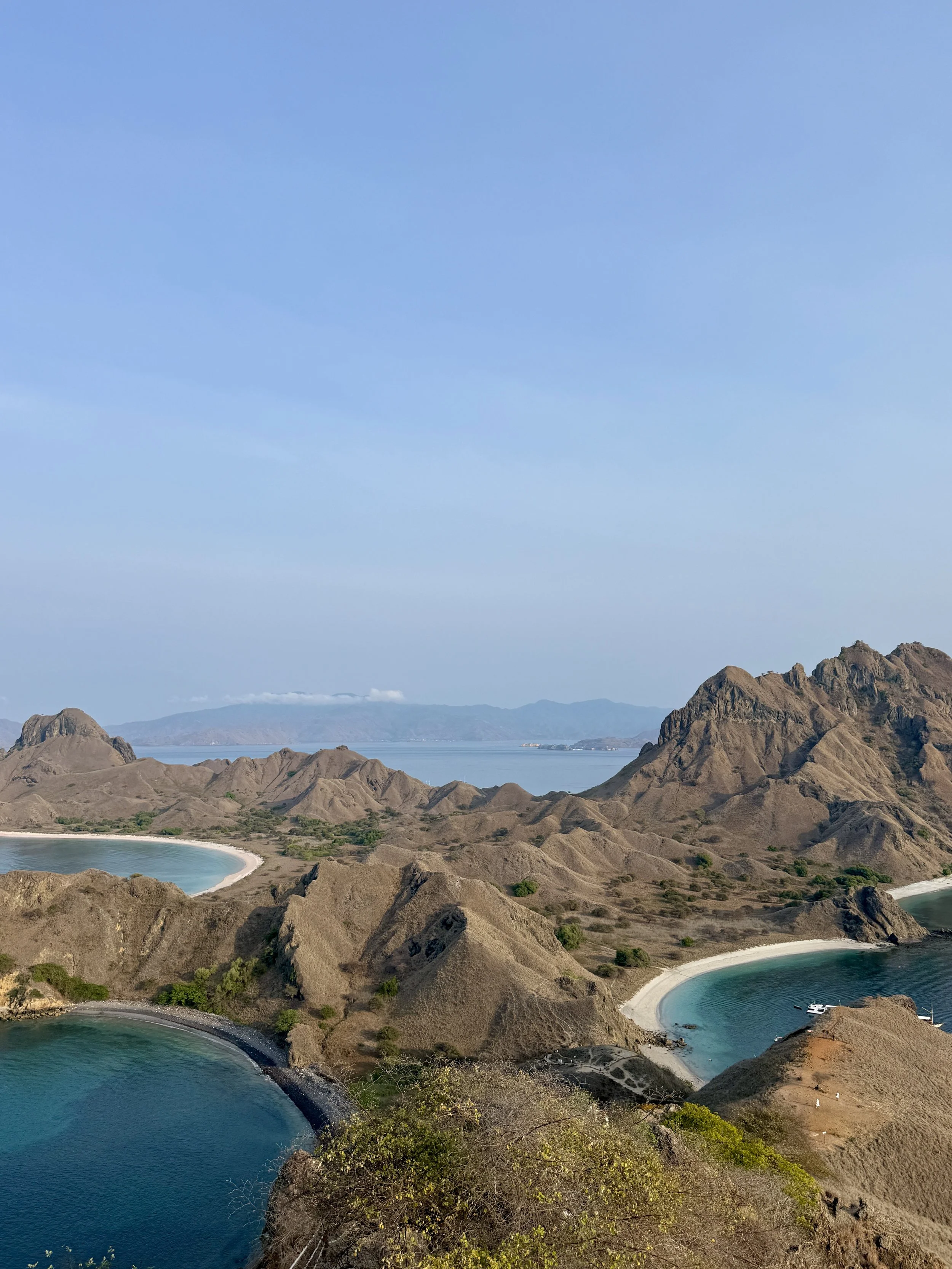
View of Padar Island
Sailing Through the Komodo Islands
We landed on Flores, an island in Eastern Indonesia, where we would be meeting our boat to set out on a 3 day sail through the Komodo Islands. I have been wanting to do this boat trip since I first visited Indonesia in 2017, but sadly wasn’t able to squeeze it in last time.
Prior to COVID there were less than 100 boats that toted tourists through the islands of Komodo, now there are over 680. The infamous view from Padar Island gained fame and the locals learned that the tourist boats were quite lucrative. This caused a huge surge in companies offering Komodo cruises, but also meant that there were a lot of companies who were cutting corners and upselling their product. There are endless stories of boats sinking or people booking a boat that looks like luxury but is actually quite awful once they’re onboard. In fact, the day after I booked our cruise there was a boat that sank. Since we were booking about one week in advance, there was slim pickings. Thankfully, after meticulously looking through literally every boat option available for our dates, I was able to secure us the last cabin left on a trustworthy site. We were all booked for the Andalucia II.
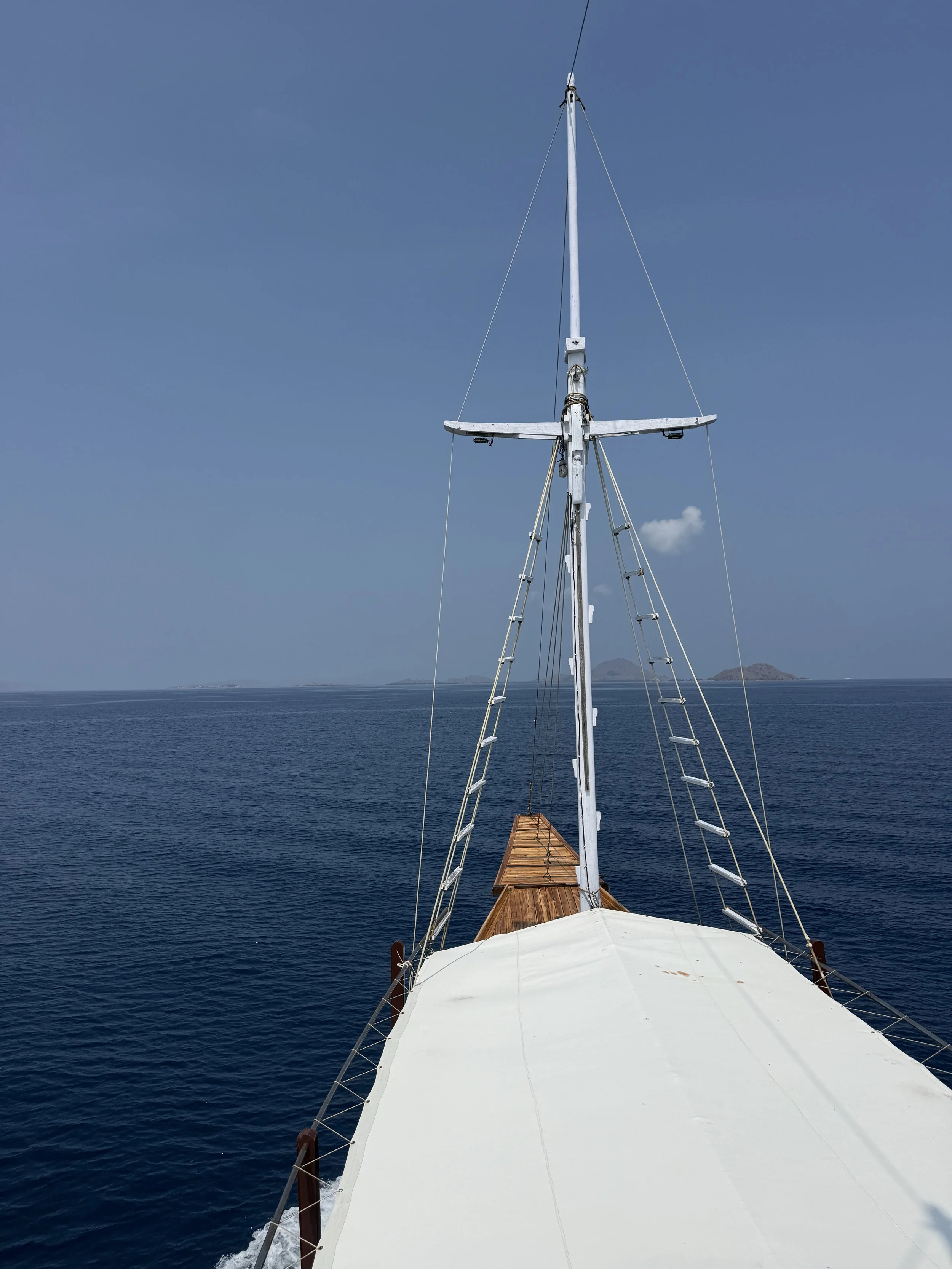
Sailing on the Andalucia II
Our boat was absolutely perfect—we had a fun crew, a good group on board, delicious food, and an itinerary that helped us to avoid some of the crowds. We spent our days bopping around to different snorkel spots and beautiful beaches. Hayden was most looking forward to the chance of snorkeling with reef manta rays, which can get as large as 10 to 16 feet. Our guide let us know that it wasn’t manta season, so sightings weren’t super likely. In fact, on the first day we visited Manta Point, we had no such luck. Thankfully, we went back one final time on our last day and we were lucky enough to see three! They truly are so majestic to see in person—they’re large and graceful and dance their way through the water. Manta rays are known to be quite playful and we had a large one swirling around in circles underneath us for such a long time.
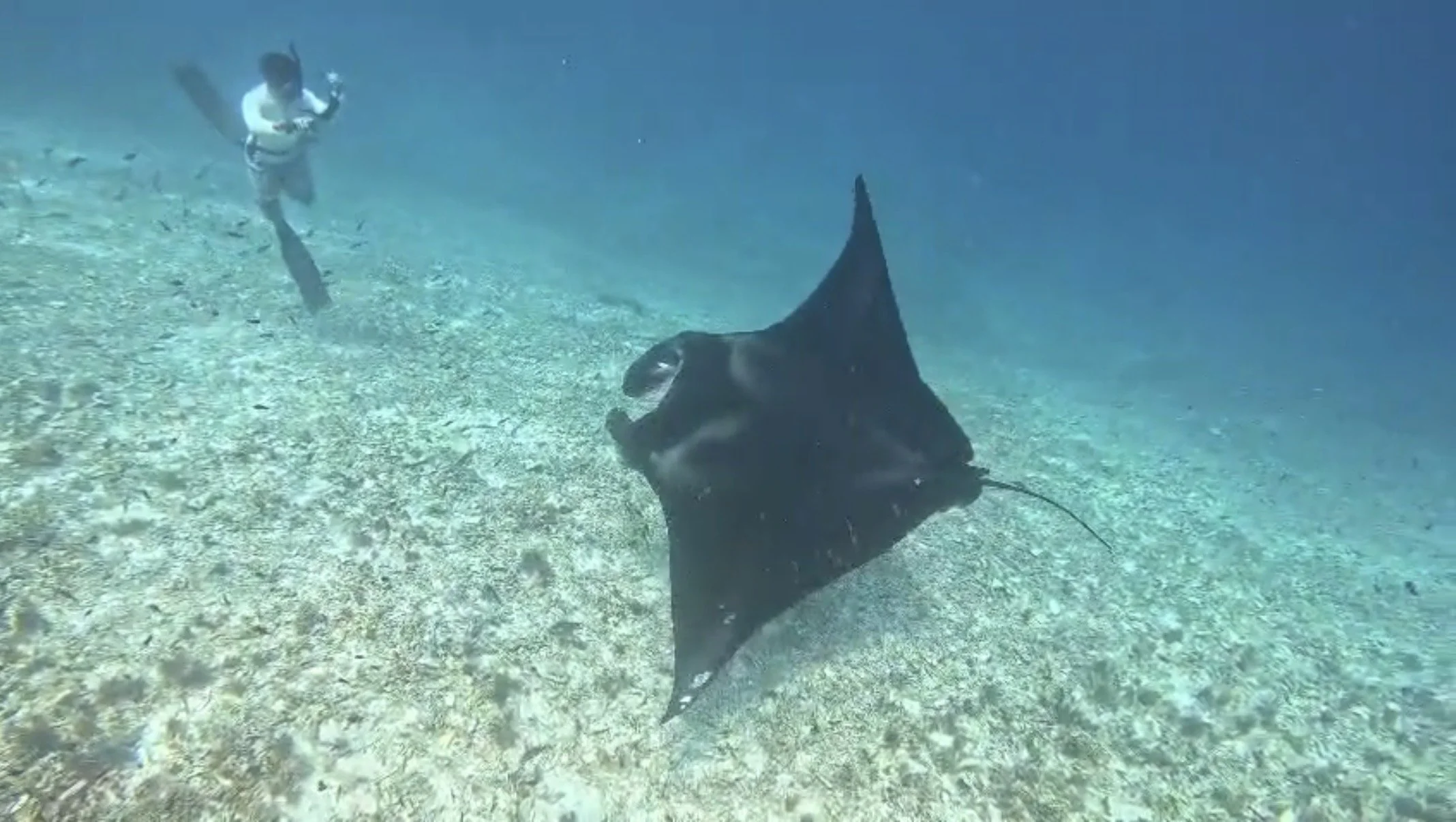
Swimming with the Manta Rays
And I’d be remiss not to mention that of course we saw Komodo Dragons in the Komodo Islands! They were so much larger than expected—they get up to 8-10ft and 150-200lbs.
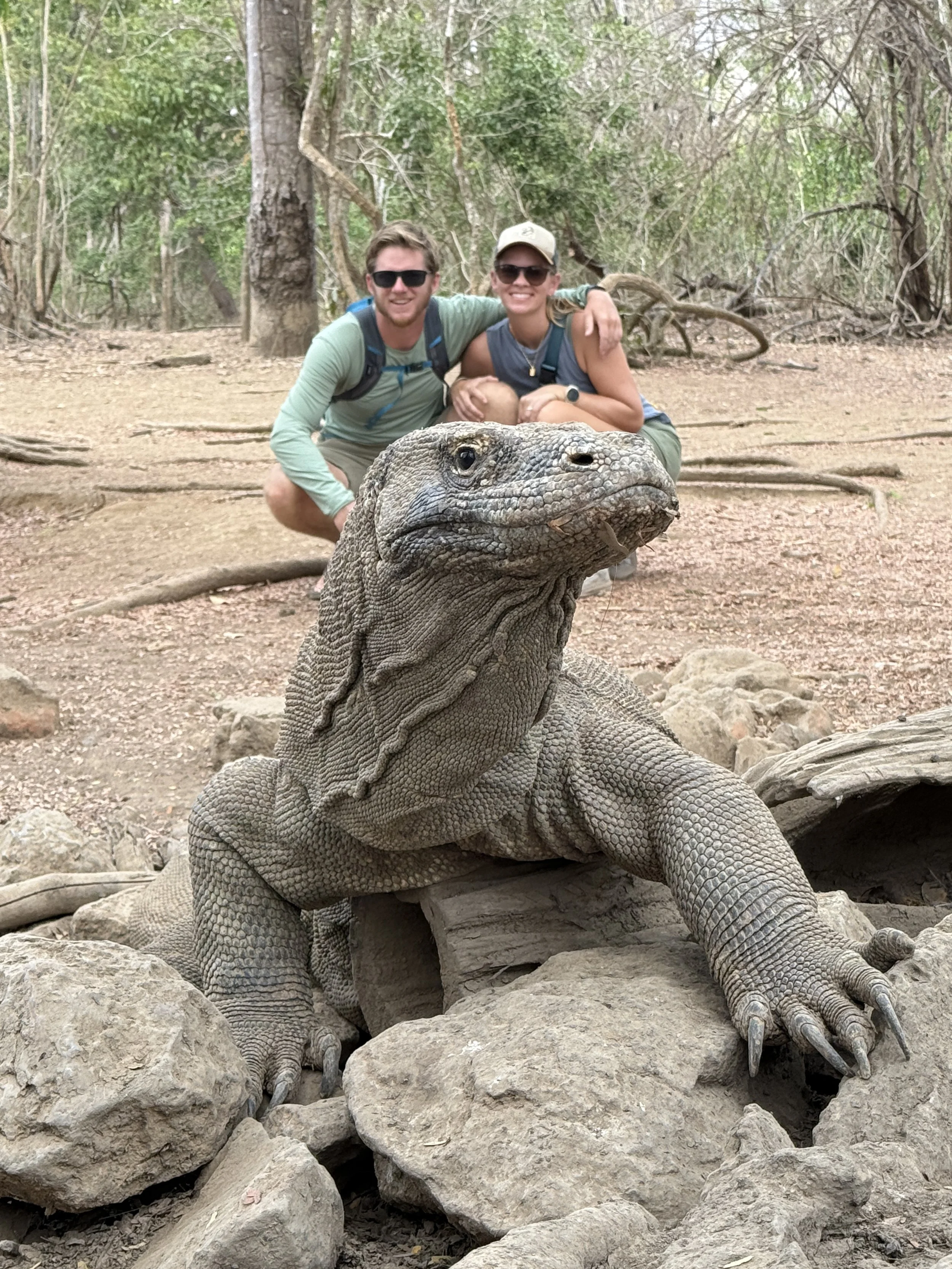
Posing with a Komodo Dragon!
Getting to the “The Last Paradise on Earth”
To get to special places, you often have to put in the work. This of course really does make that special place all the more special and Raja Ampat was no exception
Raja Ampat is an archipelago in Southwest Papua, Indonesia and it’s home to the most marine biodiversity in the entire world. It has 1,500 species of fish and over 500 species of coral. It has crystal clear waters, white sand beaches, and rocky karsts covered in jungle that shoot up out of the water. To make this area even more unique, these karsts are actually ancient coral reefs that the tectonic plates pushed up above the water 2 million years ago.
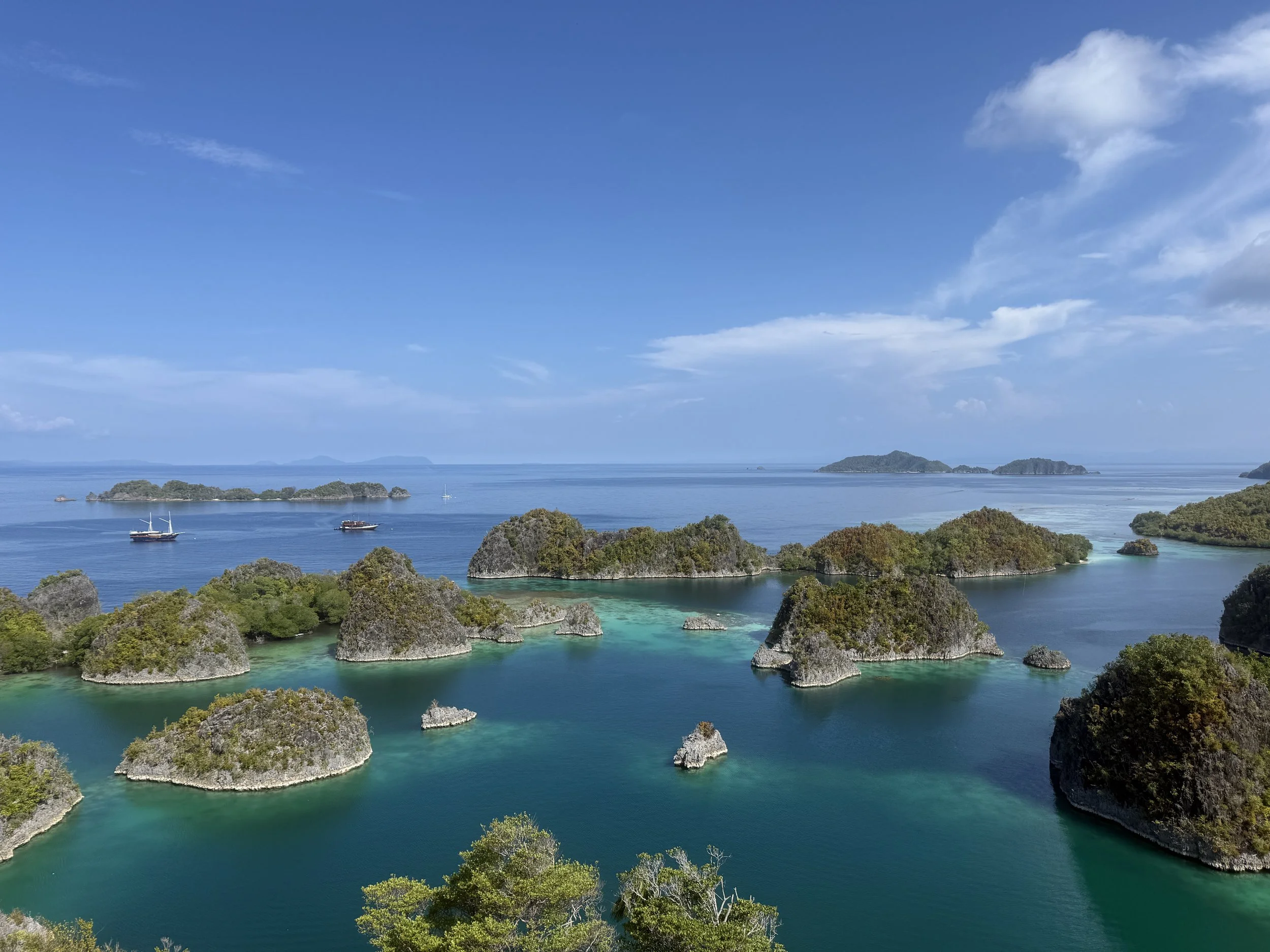
Piaynemo viewpoint in Raja Ampat
We visited two areas of Raja Ampat: the first being Misool, an extremely remote region in the south, and the second being the island of Kri in central Raja Ampat which is much more accessible and receives more visitors. From what I can find online, about 34,000 people visit Raja Ampat each year with only about 1,500-2,000 people making the trek out to Misool. After visiting both, we firmly believe that all of the magic is in Misool and while it was an absolute pain to get to (and I’m still dealing with those consequences,) it was 100% worth it.
Our journey to Misool started as we left Lombok, taking 3 different flights until we finally made it to Sorong, the main city on the island of Papou. Once in Sorong, which is quite a sad city, we had to take a 9-hour, overnight ferry. We were connected with Dila, a guide from our homestay in Misool, who would be on the ferry as well and assured us that she would handle our tickets. We were told to show up to the ferry an hour before it left and if anyone were to ask us about tickets we should tell them “we’re with Dila” and we’d be fine.
As we were walking up to our ferry, we realized that it really wasn’t a ferry at all but instead it was a cargo ship that also happened to allow passengers on board. We walked over a wooden plank into the belly of the ship and pure chaos. People were shouting and running around, loading up boxes of provisions, large bags of rice, and crates of fruit. We made our way to the second floor, which had a small passenger area and waited for Dila to arrive.
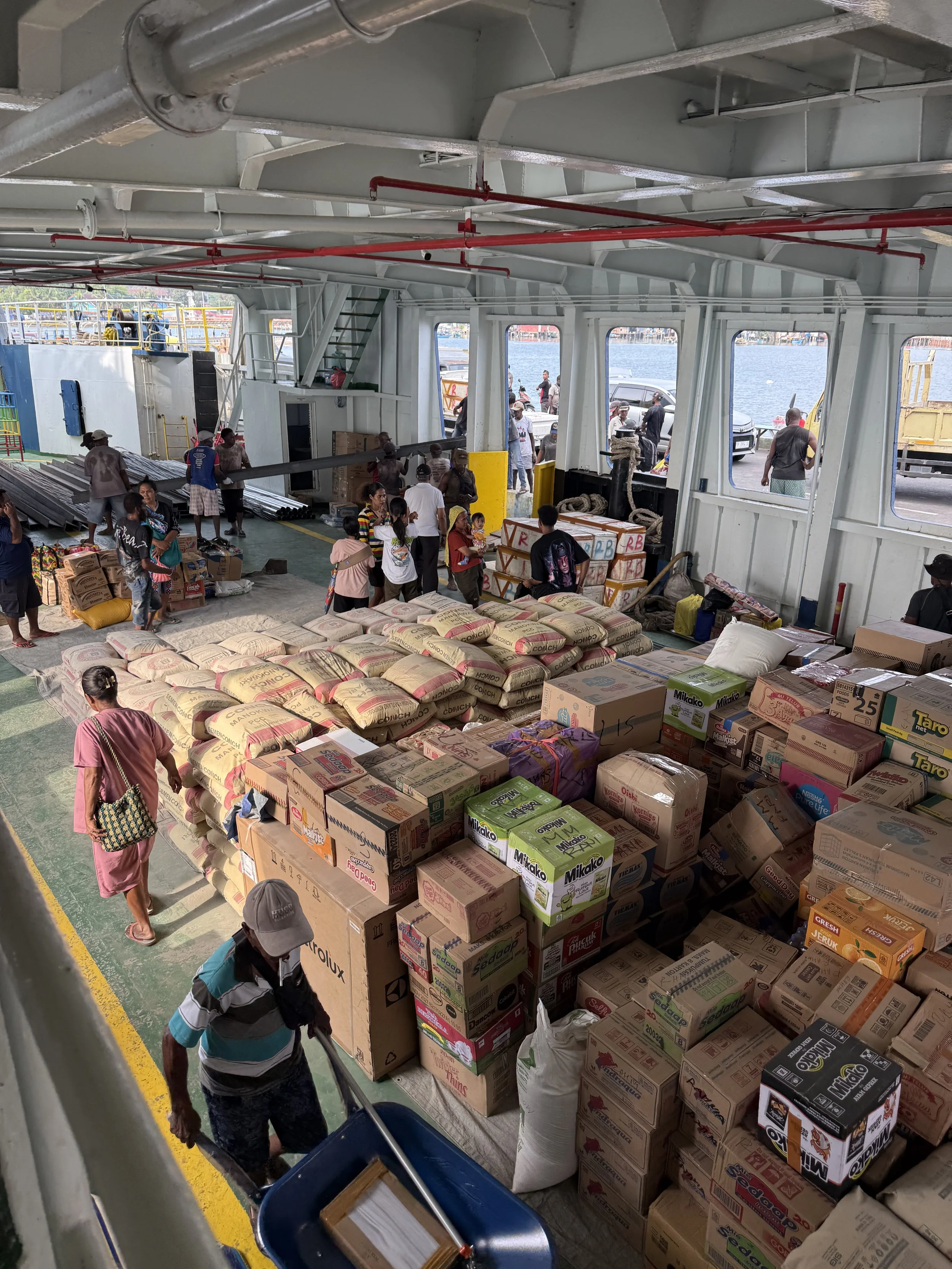
Inside the ferry/cargo ship
We booked a cabin and after seeing the passenger area I was very grateful we’d splurged for a bed. However we learned that it wasn’t actually a cabin like you would assume on a ferry, but instead they just rent out the boat workers’ beds. So we were assigned two bottom bunks in a 2 bunkbed room, where two Indonesian boat workers live. It did cross my mind that this was a little gross and I was sure the sheets hadn’t ever been cleaned, but again we were so excited to get a bed that I really didn’t care in the slightest. We spent the night playing cards and eating cookies on the deck before going back to our cabin to sleep for the night.
We woke the next morning in Misool and got off our ferry and onto a smaller boat. One last 1.5 hour boat ride and we finally arrived at our homestay which was perched right over the water. It wasn’t even built onto an island, simply built onto a reef and we felt that we had never been so remote. It was a few hours later when about 20+ bug bites started to appear all over my ankles and knees. The next morning, several of them had turned into bubbles. At first I was convinced they were mosquito bites but after Hayden made me realize that literally no one else in our group of 12 had a single mosquito bite, nor had we seen a single mosquito, it was most likely something from the overnight ferry. Which we have now learned was almost certainly bed bugs and since I have had bedbug bites before, I had the luck of having a heightened reaction, hence the bubbles. The bites are incredibly itchy until they turn into bubbles and then they burst into an open wound and then eventually turn into a scab. And for those concerned, it’s not THAT bad. Like it was, but I’m fairly certain we now have our bedbug drama under control. (As I write this from my pristine bed in Tokyo, with freshly laundered everything.)
And so as we were snorkeling I couldn’t wear flippers because they would pop my painful little blisters and on top of that, sometimes there were jellyfish who would sting you all over. It really was a price worth paying because we swam in perhaps the prettiest spots on earth.
Experiencing the “The Last Paradise on Earth”
Hayden and I did not pack our GoPro, so I sadly have no pictures for you of what it was like, but I will do my best to describe it. For starters, imagine you gave a four year old a pack of neon colored Crayons and let them color the scene. The reef was filled with lively and vibrant coral of literally every single color. There was hot pink, bright orange, neon yellow, green, and purple—all in varying shapes, sizes, and textures. Coral that is shaped as a massive bowl, coral that is shaped like a little forest of pool noodles, large rocks patterned like a brain, squiggly anemones that look so soft and sway easily in the current. And then there are tens of thousands of equally varied and colorful fish. It’s almost overstimulating how much is going on. You’ll be staring at a clownfish who is poking in and out of his anemone home when a small school of tiny neon blue fish catch your eye and then a multicolored parrot fish will pull you in another direction but right after that a massive school of sardines swim by in a cloud and you just have to swim over to watch as they part around you in unison. And the craziest part is, this is all just below the surface. At maybe 8in below the waterline you get a front row view to the everyday activities of the reef in a way that’s usually only reserved for scuba divers. It was absolutely amazing and we’re ruined forever because I don’t think snorkeling can ever get better than that.
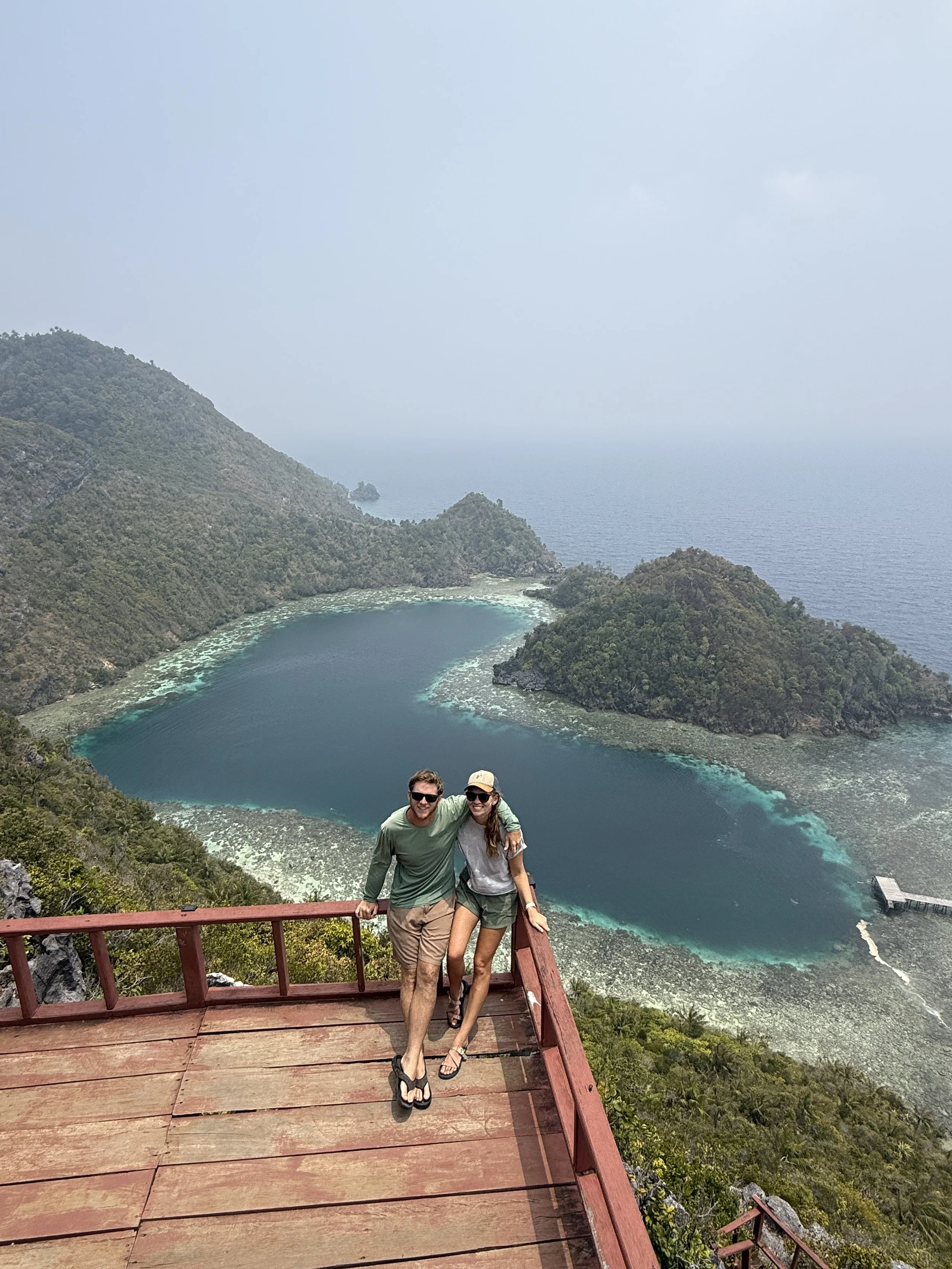
Visiting the heart lagoon
Even when we weren’t snorkeling we could watch the happenings of the reef right from our little overwater bungalow. We saw epaulette sharks (they can walk out of water!), octopus, clownfish, stingrays, black tip sharks, and so much more right from our door. Sadly, there were wildfires happening while we were there and so the sky was a bit overcast for many of our days, but we still got some incredible views. We also visited endless empty, white sand beaches that were filled with thousands of hermit crabs. The whole place is absolutely magic.
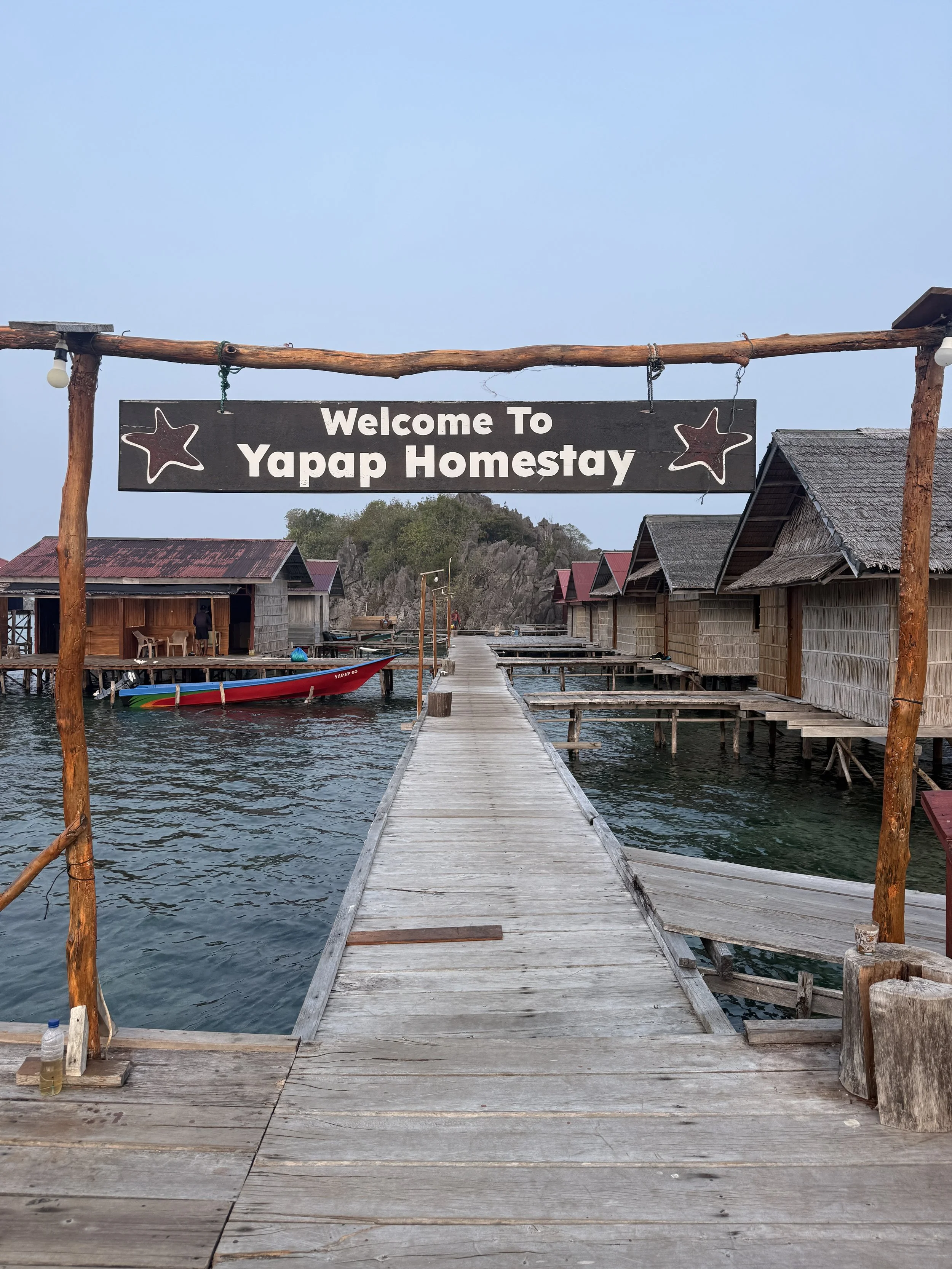
Our homestay, Yapap Homestay, in Misool
Sleep tight and don’t let the bedbug bites!
